
5 Warning Signs Your Dryer Vent Needs Cleaning Now
What to look for, what you can check yourself and what the U.S. Fire Administration and NFPA say about preventing dryer fires.
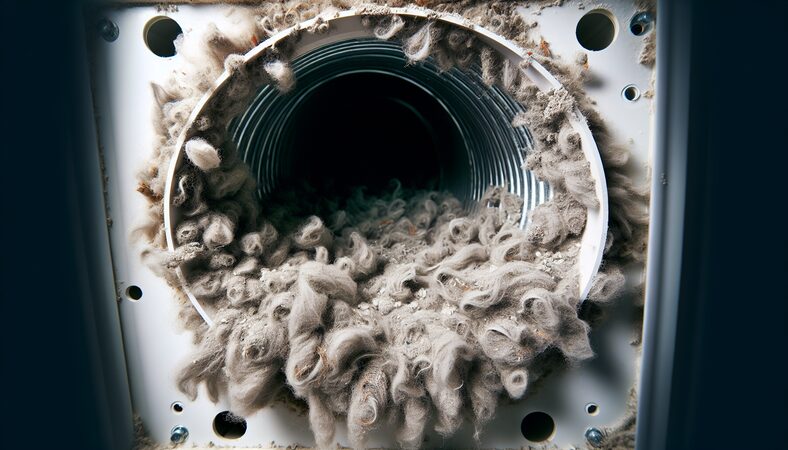
Your dryer vent needs attention if clothes take longer than normal to dry or are still damp after a cycle, clothes feel hotter than usual at the end of the cycle, little air comes out of the outside vent, the duct behind the dryer is crushed or damaged, or it's been over a year since the last cleaning.
Here's what to expect in this post:
- Why a clogged dryer vent is a fire risk, with the U.S. Fire Administration's numbers.
- The five warning signs, and how to check each one.
- Why winter deserves extra attention in Rochester and southeast Minnesota.
- What you can do yourself, and when to call a professional.
- Answers to common questions about dryer vent safety.
Worried about your dryer vent?
Call us or request a quote for dryer vent cleaning.
Why Is a Clogged Dryer Vent a Fire Risk?
Because lint burns easily and a clogged vent traps heat. The U.S. Fire Administration calls lint "a highly combustible material that can accumulate both in the dryer and in the dryer vent." Built-up lint reduces airflow, and a vent that can't exhaust properly to the outside may let the dryer overheat and start a fire.
A U.S. Fire Administration report on clothes dryer fires covers 2008 to 2010. In those years, fire departments responded to an estimated 2,900 clothes dryer fires in residential buildings each year. Those fires caused an annual average of 5 deaths, 100 injuries and $35 million in property loss.
Failure to clean was the leading factor contributing to those fires, at 34 percent. The National Fire Protection Association (NFPA) agrees: the leading cause of home clothes dryer fires is failure to clean them. Mechanical and electrical failures cause some dryer fires too, so cleaning lowers your risk but isn't the whole story. Have your dryer installed and serviced by a professional, as the NFPA advises.
1. Do Your Clothes Take Longer to Dry?
If so, your vent may be clogged. The U.S. Consumer Product Safety Commission (CPSC) says that if clothing is still damp at the end of a typical drying cycle, or drying takes longer than normal, the lint screen or the exhaust duct may be blocked.
Start with the easy fix: clean the lint filter. If drying is still slow with a clean filter, the vent line is the likely problem. The U.S. Fire Administration says that if heavy clothes such as jeans or towels are taking a long time to dry, a clogged dryer vent exhaust is likely the cause.
2. Do Clothes Feel Hotter Than Usual at the End of a Cycle?
Pay attention to it. The U.S. Fire Administration names clothes that feel hotter than usual at the end of the cycle as another sign that the dryer vent exhaust is likely clogged.
Your dryer is built to push hot, moist air out through the vent to the outside of your home. When lint narrows the vent, that air has nowhere to go. The U.S. Fire Administration warns that a compromised vent will not exhaust properly to the outside, and that overheating may follow.
3. Is Little or No Air Coming Out of the Outside Vent?
Go outside and check while the dryer is running. The CPSC says to check the outside dryer vent while the dryer is operating to make sure exhaust air is escaping. If it isn't, the vent or the exhaust duct may be blocked.
Look at the vent covering too. The U.S. Fire Administration says to make sure the outdoor vent covering opens when the dryer is operating, and to check periodically that nests of small animals and insects aren't blocking the outside vent.
4. Is the Duct Behind Your Dryer Crushed or Made of Plastic or Foil?
Either one restricts airflow. The U.S. Fire Administration says to check the venting behind the dryer to make sure it isn't damaged, crushed or restricted. That's easy to miss when a dryer gets pushed back against the wall.
The material matters, too. The CPSC says flexible plastic or foil duct can more easily trap lint and is more likely to kink or be crushed, which can greatly reduce airflow. It recommends replacing plastic or foil accordion-type duct with rigid or corrugated semi-rigid metal duct. The NFPA also says rigid or flexible metal venting should be used to sustain proper airflow and drying time.
5. Has It Been More Than a Year Since the Vent Was Cleaned?
Then it's time. The NFPA says to clean lint out of the vent pipe once a year, or more often if your clothes are taking longer than normal to dry, or to have a dryer lint removal service do it for you.
The U.S. Fire Administration gives similar advice: the inside of the dryer and the venting system should be serviced and cleaned periodically by qualified service personnel, especially if clothes are taking longer than normal to dry.
Why Does Winter Matter in Rochester?
Dryer fires are more common in the colder months. In the U.S. Fire Administration's 2008 to 2010 data, residential clothes dryer fires were higher in the fall and winter, peaking in January at 11 percent. The agency says the quantity and type of clothes worn in cooler months, and the fact that people are less likely to dry clothes outdoors, may explain the increase.
Snow is the other winter concern for homes in Rochester and southeast Minnesota. The NFPA says to check the outdoor vent flap to make sure it isn't covered by snow. After a storm, add the dryer vent to the list of things you clear.
What Can I Check Myself?
Quite a bit. These steps come from the U.S. Fire Administration and the NFPA:
- Clean the lint filter before or after each load, and never run the dryer without one.
- Clean the back of the dryer, where lint can build up.
- Make sure the vent exhausts directly outside. The U.S. Fire Administration says serious hazards occur when it doesn't.
- Keep the area around the dryer clear of things that can burn, like boxes, cleaning supplies and clothing.
- Don't overload the dryer, and follow the manufacturer's instructions.
- Turn the dryer off if you leave home or when you go to bed.
Some jobs need a professional. Cleaning the full vent line takes the right equipment. If you have a gas dryer, the U.S. Fire Administration says to have it inspected by a professional annually to make sure the gas line and connection are intact and free of leaks. That's a job for a qualified appliance or gas technician, not a vent cleaner.
How We Clean Dryer Vents
MedCity Duct Cleaning provides professional dryer vent cleaning for homes throughout Rochester and Southeast Minnesota. We use the Rotobrush dryer vent system, a rotating brush paired with a high-performance vacuum, to clean the full length of your vent from the dryer connection to the exterior opening. Most dryer vent cleanings take between 30 and 60 minutes. After cleaning, we run the dryer and check the output at the exterior vent to verify that air is flowing freely.
If you notice an overheating dryer or anything else that worries you about safety, call us at (507) 289-4039. We offer same-day service, subject to availability, and we prioritize safety-related calls.
Frequently Asked Questions
How often should a dryer vent be cleaned?
At least once a year. The NFPA says to clean lint out of the vent pipe once a year, or more often if your clothes are taking longer than normal to dry, or to have a dryer lint removal service do it for you.
How often should I clean the lint filter?
Every load. The NFPA says to clean the lint filter before or after each load of laundry and never to use the dryer without a lint filter.
Is a plastic or foil dryer vent hose safe?
It's not the best choice. The NFPA says rigid or flexible metal venting should be used to sustain proper airflow and drying time, and the CPSC says plastic or foil duct can more easily trap lint and is more likely to kink or be crushed.
Does my dryer vent have to go outside?
Yes. The U.S. Fire Administration says serious hazards occur when dryer vents do not exhaust directly to the outside.
Are dryer fires more common in winter?
Yes. In U.S. Fire Administration data for 2008 to 2010, residential clothes dryer fires were more common in fall and winter and peaked in January. The agency says the quantity and type of clothes worn in cooler months, and less outdoor drying, may explain the increase.
Is It Time to Clean Your Dryer Vent?
If any of the five signs sound familiar, don't wait. Call us at (507) 289-4039 or request a quote online.
Sources
- Clothes Dryer Fires in Residential Buildings (2008-2010), U.S. Fire Administration (FEMA), Topical Fire Report Series
- Clothes Dryer Fire Safety, U.S. Fire Administration (FEMA)
- Clothes Dryer Safety Tips, National Fire Protection Association (NFPA)
- Overheated Clothes Dryers Can Cause Fires, U.S. Consumer Product Safety Commission
The MedCity Duct Cleaning Team
Locally owned and operated in Rochester, MN since 2016. We specialize in residential and commercial air duct and dryer vent cleaning using professional Rotobrush equipment.