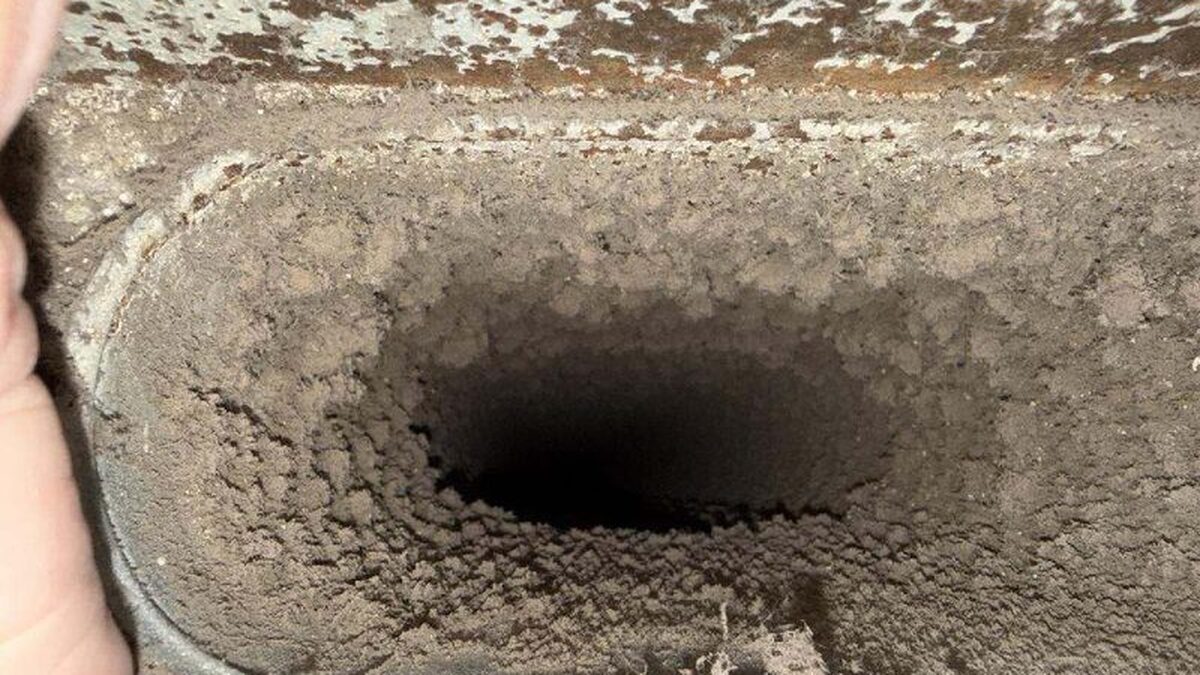
You can't tell by looking. The EPA says a substance may look like mold, but only an expert can say for sure, and it may take lab analysis. The EPA also says it is normal for return registers to get dusty. If you see or smell mold, the Minnesota Department of Health says to assume a problem exists.
Here's what to expect in this guide:
- Why color won't tell you whether it is mold
- Why registers get dusty
- Whether a mold test is worth it
- How to clean the marks
- When the ducts themselves need attention, and who to call
Can You Tell Mold From Dust by Looking?
No. The EPA's duct cleaning guide says "although a substance may look like mold, a positive determination of whether it is mold or not can be made only by an expert and may require laboratory analysis for final confirmation."
Color doesn't settle it either. The Minnesota Department of Health (MDH) says mold "can have a cottony, velvety, granular or leathery texture" and its color "can vary from white, gray, brown, black, green or other colors."
Better clues are moisture and smell. MDH describes mold odors as musty or earthy and says to look for water leaks, water stains and condensation problems. Its rule: "If you see or smell mold, you should assume that a problem exists."
Why Do Air Vents Get Dusty?
Because air carries dust through them. The EPA says "It is normal for the return registers to get dusty as dust-laden air is pulled through the grate. This does not indicate that your air ducts are contaminated with heavy deposits of dust or debris; the registers can be easily vacuumed or removed and cleaned."
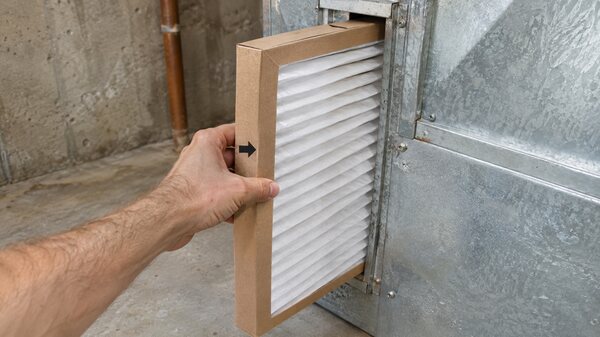
That doesn't rule out mold, so the moisture and smell clues still matter. To cut household dust, see our guides to lowering dust in winter and choosing a furnace filter.
Should You Test It for Mold?
Usually not. MDH says "In most situations, MDH does not recommend mold testing." Its reasons: testing is expensive, there is no health-based standard for mold in air, and any indoor mold is a problem. MDH adds that "Testing should never be a substitute for a good visual inspection."
The EPA agrees: "In most cases, if visible mold growth is present, sampling is unnecessary." For one spot, the EPA says some labs can tell whether a sample on "a clear strip of sticky household tape is mold or simply a substance that resembles it."
How Should You Clean It?
Start with the register. The EPA says registers "can be easily vacuumed or removed and cleaned." If you think it may be mold, the EPA's Brief Guide to Mold, Moisture and Your Home says to "Scrub mold off hard surfaces with detergent and water, and dry completely."
- Protect yourself. MDH says to consider rubber gloves, safety goggles, an N95 or N100 respirator and outer clothing.
- Skip the bleach as a routine. The EPA says a biocide such as chlorine bleach "is not recommended as a routine practice during mold cleanup."
- Fix the water. MDH calls finding and fixing the moisture problem "the most important step."
Want to see what's in your ducts?
Request a free estimate — no obligation.
Does It Mean Your Ducts Need Cleaning?
Not on its own. The EPA says to consider duct cleaning if there is substantial visible mold growth inside hard-surface (sheet metal) ducts or on other parts of the system, if ducts are infested with rodents or insects, or if ducts are clogged with excessive dust and debris.
The EPA adds that "If the conditions causing the mold growth in the first place are not corrected, mold growth will recur." Our guide to whether air duct cleaning is worth it covers the EPA's full position.
What's Different in Minnesota?
Humidity and cold surfaces. MDH says controlling the "high humidity that frequently causes mold growth in our climate" takes ventilation, air circulation near cold surfaces, dehumidification and less moisture produced in the home. It suggests keeping relative humidity "between 20-40 percent in the Winter and less than 60 percent the rest of the year."
MDH also gives Minnesotans technical advice by phone and email, though it "does not provide inspection or testing services."
Who Should You Call?
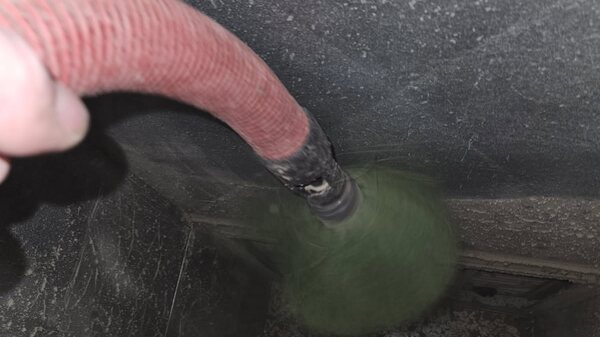
MedCity Duct Cleaning does not test for mold. We clean the ductwork from the furnace up to the registers, register by register, with a Rotobrush and a HEPA-filtered vacuum. For a leak or condensation at the furnace or air conditioner, call a heating and cooling contractor. For a mold investigation, MDH publishes guidelines for selecting an indoor air quality consultant. For health concerns, MDH says to contact your medical provider; it notes children and people with asthma or allergies may have more severe reactions.
If the moisture is handled and you want the dust out of your ducts, see our air duct cleaning service.
Frequently Asked Questions
How can I tell mold from dust at a vent?
Not by color. The Minnesota Department of Health says mold can be white, gray, brown, black, green or other colors, and the EPA says only an expert can confirm it. Moisture or a musty smell are better clues.
Can I test it myself?
The Minnesota Department of Health does not recommend mold testing in most situations. The EPA says some labs can check a sample on clear household tape. If you see or smell mold, MDH says to assume a problem exists.
Why is there a dark ring on the ceiling around a vent?
A mark alone won't tell you the cause. The EPA says it is normal for return registers to get dusty. If the mark comes with water stains, condensation or a musty smell, treat it as possible mold.
Should I clean it off, and with what?
Yes. The EPA says registers can be vacuumed or removed and cleaned. For mold, it says to scrub hard surfaces with detergent and water and dry completely. MDH suggests gloves, goggles and an N95 respirator.
Does it mean my ducts need cleaning?
Not by itself. The EPA says to consider duct cleaning for substantial visible mold inside hard-surface ducts, rodents or insects, or ducts clogged with excessive dust and debris.
Who do I call if it is mold?
For a leak or condensation at the furnace or air conditioner, call a heating and cooling contractor. For an investigation, MDH points to indoor air quality consultants and mold remediation professionals. For health concerns, contact your medical provider.
Should I keep running the furnace if I think there is mold in the ducts?
No. The EPA says not to run the HVAC system if you know or suspect that it is contaminated with mold, because it could spread mold throughout the building.
Does MedCity Duct Cleaning test for mold?
No. MedCity Duct Cleaning does not test for mold. We clean ductwork from the furnace up to the registers. The Minnesota Department of Health publishes guidelines for selecting an indoor air quality consultant.
I rent. Who is responsible for mold?
Generally the landlord. The Minnesota Department of Health says the landlord is generally responsible for moisture problems and removing mold, unless it is related to the tenant's behavior, and that both should work together.
Questions about the dust at your vents? Request a quote online or call us at (507) 289-4039.
Sources
- Should You Have the Air Ducts in Your Home Cleaned?, U.S. Environmental Protection Agency
- A Brief Guide to Mold, Moisture and Your Home, U.S. Environmental Protection Agency
- Mold and Moisture, Minnesota Department of Health
The MedCity Duct Cleaning Team
Locally owned and operated in Rochester, MN. We specialize in residential and commercial air duct and dryer vent cleaning using professional Rotobrush equipment.