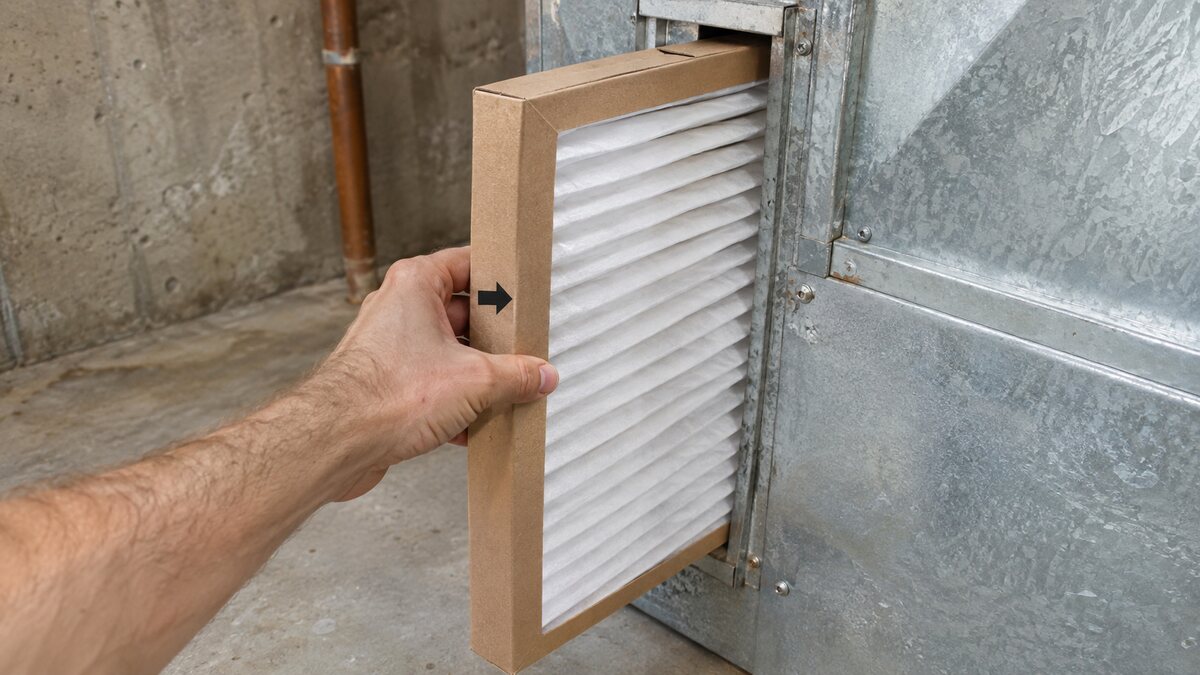
Use the highest MERV rating your furnace can handle, and the EPA suggests at least MERV 13 if you are upgrading. Most furnaces can take a MERV 13 filter if you replace it often, but systems are rarely labeled, so check your manual or ask an HVAC technician before you switch.
Here's what to expect in this guide:
- What a MERV rating measures
- Which ratings the major programs require
- Why a higher rating is not always better for your furnace
- How filter thickness and fit affect airflow
- How often to change the filter
What Does a MERV Rating Mean?
MERV stands for Minimum Efficiency Reporting Value, a national rating for how well a filter captures particles. The U.S. Department of Energy's Building America Solution Center says the rating "corresponds to a level of performance ranging from 1 to 16 - the higher the MERV rating, the more effective a filter is at capturing particles passing through it." It is measured by the ASHRAE 52.2 test method for particles sized from 0.3 to 10 micrometers.
The EPA's guide to air cleaners puts it this way: "MERV is based on a national consensus standard." It adds that "the higher the filter rating, the higher the removal efficiency for most particle sizes."
Which MERV Rating Do the Programs Require?
The minimums are modest. The Building America Solution Center says "ENERGY STAR requires filters that are MERV 6 or higher, and DOE's Zero Energy Ready Home program and EPA's Indoor AirPlus program require MERV 8 or higher."
The EPA goes further for homeowners who want better filtration: "choose a filter with at least a Minimum Efficiency Reporting Value (MERV) 13 rating, or as high a rating as your system fan and filter slot can accommodate." It also says "Filters with a MERV of 13 and above are required to demonstrate at least 50% removal efficiency for the smallest particles tested."
Can My Furnace Handle a MERV 13 Filter?
Most can. The EPA says "Most furnaces and HVAC systems can accommodate a MERV 13 filter without creating equipment problems, provided that the filter is replaced frequently."
The catch is knowing for sure. The EPA says "HVAC systems are not commonly labeled with any filter recommendations" and suggests you "consult a professional HVAC technician" to be certain a filter will work with your system.
Why Isn't a Higher MERV Rating Always Better?
Because the filter has two jobs. The Building America Solution Center says "There are two elements of HVAC filter performance: (1) the effectiveness at removing particles from the air and (2) resistance to airflow (i.e., pressure drop) across the filter." It says the filter's contribution to total system pressure drop is typically 20%-50%, depending on the system.
That resistance is why the details matter:
- Clogging and collapse. The center says problems "such as clogging and filter collapse" are "more likely to occur with higher MERV filters."
- Ductwork limits. It says a very high MERV filter "may require the alteration or replacement of ducting if the pressure drop of the filter is greater than the pressure drop allotted to the filter in the system design."
In short, a filter that is too restrictive for your system may work against it. That's why the EPA ties its MERV 13 advice to what your fan and filter slot can accommodate.
Want to see what's in your ducts?
Request a free estimate — no obligation.
Does Filter Thickness Matter?
It may. The Building America Solution Center compares three MERV 7 filters made by the same manufacturer. Filter A is 1 inch thick with 0.20-inch WC of resistance at 300 feet per minute of air flow velocity. Filter B is 2 inches thick at 0.13-inch WC, and Filter C is 4 inches thick at 0.12-inch WC. Same rating, noticeably different resistance.
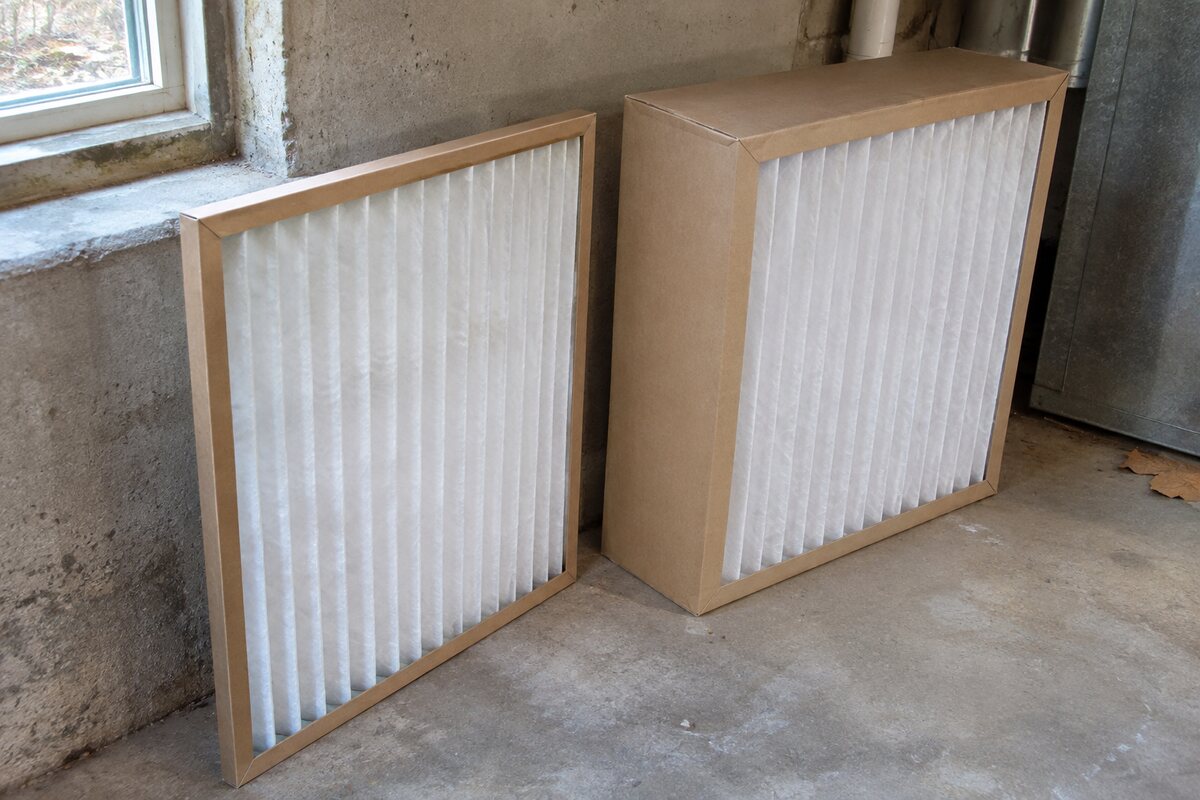
Whatever you choose, it has to fit. The EPA says "Filters commonly come in thicknesses of 1 to 5 inches" and to "Make sure the filter fits snugly so air does not leak around the filter and you do not have to bend or crush the filter to make it fit."
How Often Should I Change My Furnace Filter?
Follow the manufacturer's recommendation. The EPA says "Manufacturers typically recommend replacement every 60 to 90 days. If you notice that filters appear heavily soiled when you replace them, you should consider changing them more frequently." The Department of Energy's center says filters "should be replaced every three months or sooner if needed, especially if the HVAC equipment is used continually."
In a Minnesota winter, your furnace runs a lot. ENERGY STAR's maintenance checklist says to "Inspect, clean, or change air filters once a month" and warns that "A dirty filter can increase energy costs and damage your equipment, leading to early failure." Checking monthly and changing when it looks dirty is an easy habit.
Will a Better Filter Replace Duct Cleaning?
They do different jobs. A filter catches particles as air passes through it. Duct cleaning is about what has already settled inside the ductwork. Our guide to whether air duct cleaning is worth it covers when the EPA says to consider it, and our guide to lowering dust in winter covers the other steps.
Frequently Asked Questions
What MERV filter should I use for my furnace?
The EPA says that if you upgrade, choose a filter with at least a MERV 13 rating, or as high a rating as your system fan and filter slot can accommodate. It adds that you may need to consult a professional HVAC technician to find the highest efficiency filter that works for your system.
Can my furnace handle a MERV 13 filter?
Probably, but check. The EPA says most furnaces and HVAC systems can accommodate a MERV 13 filter without equipment problems, provided the filter is replaced frequently. It also says systems are not commonly labeled with filter recommendations, so a professional HVAC technician can confirm.
Is a higher MERV rating always better?
No. A higher MERV rating means more effective particle capture, but the U.S. Department of Energy's Building America Solution Center says filters also add resistance to airflow. Clogging and filter collapse are more likely with higher MERV filters, so fit and replacement matter.
How often should I change my furnace filter?
Follow the manufacturer's recommendation. The EPA says manufacturers typically recommend replacement every 60 to 90 days, and sooner if the filter looks heavily soiled. ENERGY STAR suggests inspecting, cleaning or changing filters once a month.
What do the MERV numbers mean?
MERV stands for Minimum Efficiency Reporting Value. It runs from 1 to 16 and is measured under the ASHRAE 52.2 test method. Higher numbers mean the filter is more effective at capturing particles from 0.3 to 10 micrometers.
Does a thicker filter help?
It may. The Department of Energy's Building America Solution Center gives an example of three MERV 7 filters from one manufacturer: the 1-inch filter had a rated resistance of 0.20 inch WC, the 2-inch 0.13 and the 4-inch 0.12. A deeper filter can have less resistance at the same MERV, but it has to fit your filter slot.
Should I use a MERV 13 filter during wildfire smoke?
The Minnesota Department of Health advises staying indoors with windows and doors closed, running air conditioning on recirculate with the fresh-air intake closed, and using a MERV 13 rated filter or higher in your HVAC system. It says to check the filter at least monthly during heavy use and more often during wildfire smoke. Confirm your system can handle it first.
Which way should the arrow on a furnace filter point?
In the direction the air flows through the filter. The Building America Solution Center says filters must be installed in the correct orientation and most have an arrow on the edge showing airflow direction when properly installed. In its upflow air handler example, with the filter below the unit, the arrow faces upward. Check your furnace's manual.
Can I put a HEPA filter in my furnace?
Be careful. The Building America Solution Center says to verify that a high-MERV or HEPA filter keeps the pressure drop within the system's limits. It adds that for filtration above MERV 13, some sources suggest separate HEPA air filtration equipment, which can work without affecting furnace performance but cleans locally rather than the whole house.
Are pleated furnace filters better than flat ones?
Often. The Building America Solution Center says filters come in flat or pleated styles and that pleated media gives more surface area to capture debris. It describes a highly pleated 1-inch filter that reaches a high MERV rating at a reasonable pressure drop. The MERV rating printed on the filter is still the best guide to what it captures.
Questions about your ducts? Learn about air duct cleaning, request a quote online or call us at (507) 289-4039.
Sources
- Guide to Air Cleaners in the Home, U.S. Environmental Protection Agency
- High-MERV Filters, Building America Solution Center (Pacific Northwest National Laboratory for the U.S. Department of Energy)
- Maintenance Checklist, ENERGY STAR (U.S. EPA and U.S. Department of Energy)
- Natural Disasters and Severe Weather: Wildfires, Minnesota Department of Health

The MedCity Duct Cleaning Team
Locally owned and operated in Rochester, MN. We specialize in residential and commercial air duct and dryer vent cleaning using professional Rotobrush equipment.