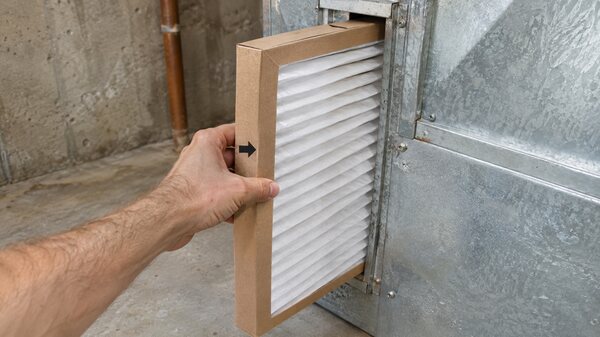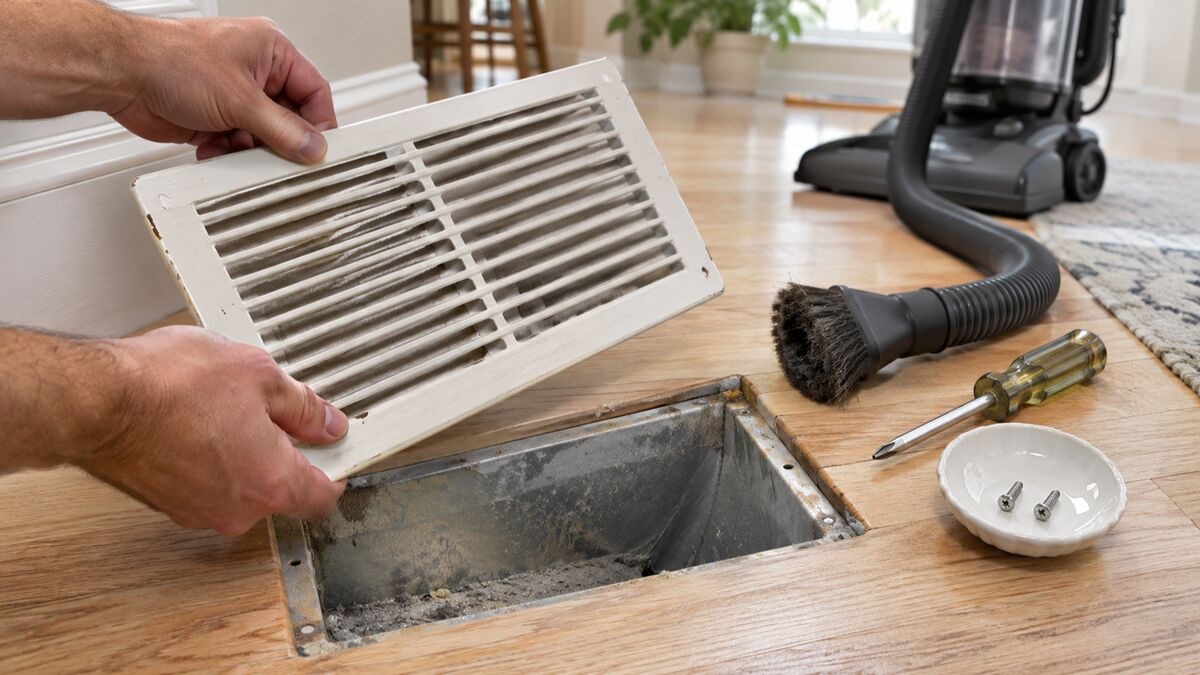
Yes, partly. You can clean what you can reach: register covers, return grilles, the duct openings as far as your vacuum hose goes, and the furnace filter. The EPA says dusty return registers are normal and easy to vacuum or remove and clean. The supply runs, return runs and main trunk lines farther in need duct cleaning equipment.
Here's what to expect in this guide:
- What you can clean yourself, step by step
- The habits the EPA recommends
- What a household vacuum can't reach
- How do-it-yourself cleaning can damage ducts
- When to call a duct cleaner, and when to call a heating and cooling contractor
What Can I Clean Myself?
Everything you can see and reach. The EPA's guide, Should You Have the Air Ducts in Your Home Cleaned?, says "It is normal for the return registers to get dusty as dust-laden air is pulled through the grate" and that "the registers can be easily vacuumed or removed and cleaned."
- Turn the system off at the thermostat.
- Remove the cover. Set the screws in a cup so none fall into the duct.
- Clean the cover. Vacuum it with a brush attachment, or wash it. The U.S. Department of Energy's Building America Solution Center says to wet-clean registers and grilles "with a detergent-type cleaner," then "Rinse them with clean water, dry them, and return them to their locations."
- Vacuum the opening as far as the hose reaches.
- Dry the cover completely before it goes back. The EPA says "Moisture should not be present in ducts."
What Habits Keep Ducts Cleaner?
Good filters and regular cleaning. The EPA says to "Use the highest efficiency air filter recommended by the manufacturer of your heating and cooling system" and to "Change filters regularly." It also says to "Remove dust and vacuum your home regularly," and during dusty renovation work to "seal off supply and return registers and do not operate the heating and cooling system until after cleaning up the dust."
ENERGY STAR's maintenance checklist lists one job to do yourself: "Inspect, clean, or change air filters once a month." Our guides to choosing a MERV filter and lowering dust in winter go further.
Will a Household Vacuum Clean My Ducts?
Not the whole system. A household or shop vacuum hose reaches the opening of a duct. The supply and return runs turn out of sight behind walls and floors, and the main trunk lines connect them near the furnace, well past where that hose can go.
Suction alone isn't enough, either. NADCA's homeowner FAQ says "A vacuum collection device alone will not get an HVAC system clean" and that tools to loosen debris stuck to duct surfaces are needed with it.
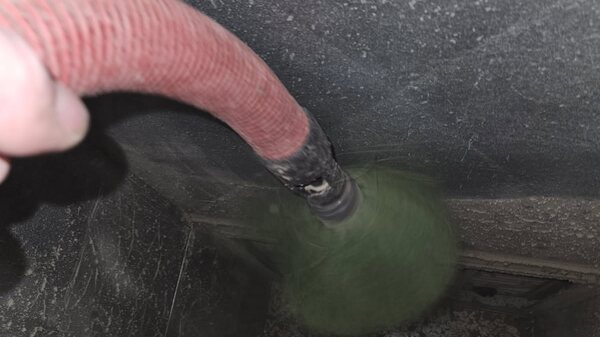
That is what our equipment is built for. On an air duct cleaning, we work register by register with a Rotobrush, a rotating brush paired with a HEPA-filtered vacuum, then clean the return ducts and main trunk lines the same way.
Can DIY Cleaning Damage Ducts?
Yes, if the tool is wrong for the duct. The Building America Solution Center says flexible ducts "are lightweight and can be easily punctured, torn, crushed, pinched, or damaged during cleaning." The EPA says to "Use only soft-bristled brushes for fiberglass duct board and sheet metal ducts internally lined with fiberglass." Skip sprays, too: the solution center says "Liquids should not be used in the duct cleaning process."
Want to see what's in your ducts?
Request a free estimate — no obligation.
Older Minnesota Homes: Check Before You Scrape
If your basement ductwork has an old wrap, paper or insulation on it, leave it alone. The Minnesota Department of Health's list of products that may contain asbestos includes "Duct work insulation" and "Furnace insulation." MDH says a Minnesota certified asbestos inspector can sample a material and have it analyzed.
When Should I Call a Professional, and Which One?
It depends on what you find. The EPA says to consider having ducts cleaned if there is "substantial visible mold growth inside hard surface (e.g., sheet metal) ducts," if ducts "are infested with vermin," or if they "are clogged with excessive amounts of dust and debris." It adds that the cause "must be corrected" first.
- A duct cleaner for the ductwork itself. MedCity Duct Cleaning cleans from the furnace to the room vents: supply and return runs, main trunk lines and registers. We also clean dryer vents.
- A heating and cooling contractor for the furnace blower, the evaporator coil, drain pans and furnace service. We don't clean the blower or the coil. ENERGY STAR puts cleaning evaporator coils and blower components in a contractor's check-up.
- A mold expert if you suspect mold. We don't test for it. The EPA says a positive determination "can be made only by an expert and may require laboratory analysis."
Not sure your ducts need cleaning at all? See whether air duct cleaning is worth it.
Frequently Asked Questions
What parts of a duct system can a homeowner clean?
The parts you can reach: register covers, return grilles, each duct opening as far as your vacuum hose goes, and the furnace filter. ENERGY STAR lists checking the filter once a month as a job to do yourself.
Will a shop vacuum clean my ducts?
Not the whole system. Its hose reaches only the opening of each duct. NADCA says a vacuum collection device alone will not get an HVAC system clean; tools that loosen stuck debris have to be used with it.
How do I clean vent covers and return grilles?
Turn the system off and lift the cover off. Vacuum it with a brush attachment, or wash it with a detergent, rinse it and let it dry completely. Vacuum the opening, then put the cover back.
Can do-it-yourself cleaning damage ducts?
Yes. The Building America Solution Center says flexible ducts can be easily punctured, torn, crushed or pinched during cleaning. The EPA says fiberglass duct board and fiberglass-lined ducts call for soft-bristled brushes only.
Is a dusty return grille a sign my ducts are dirty?
Not by itself. The EPA says it is normal for return registers to get dusty and that this does not mean the ducts hold heavy deposits of dust or debris.
When is it time to call a professional?
The EPA says to consider duct cleaning for substantial visible mold in hard-surface ducts, rodents or insects, or ducts clogged with excessive dust and debris. For the blower, the coil or the furnace, call a heating and cooling contractor.
Does MedCity Duct Cleaning clean the blower or evaporator coil?
No. We clean the ductwork from the furnace to the room vents, plus dryer vents. The blower and the evaporator coil need a heating and cooling contractor.
How often should air ducts be professionally cleaned?
The EPA says as needed, not routinely. As a rule of thumb, we recommend every 3 to 5 years, sooner for homes with pets, smokers, allergies or a recent renovation.
Done the easy part and want the rest cleaned? Learn about air duct cleaning, request a quote online or call us at (507) 289-4039.
Sources
- Should You Have the Air Ducts in Your Home Cleaned?, U.S. Environmental Protection Agency
- Removing Construction Debris from Ducts, Building America Solution Center (Pacific Northwest National Laboratory for the U.S. Department of Energy)
- Maintenance Checklist, ENERGY STAR (U.S. EPA and U.S. Department of Energy)
- Common Asbestos-Containing Products, Minnesota Department of Health
- FAQs, National Air Duct Cleaners Association (NADCA)
The MedCity Duct Cleaning Team
Locally owned and operated in Rochester, MN. We specialize in residential and commercial air duct and dryer vent cleaning using professional Rotobrush equipment.