Check the heating and cooling system, the dryer vent, moisture and radon, and ask what your inspector's report will and won't cover. Cleaning ducts after a purchase is optional: the EPA says a light amount of household dust in air ducts is normal. We clean ducts and dryer vents; we don't service furnaces.
Here's what to expect in this guide:
- What a home inspector looks at, and what the standard leaves out
- Dryer vent signs a buyer can see without opening anything
- Duct signs that may matter, and when the EPA says to consider cleaning
- Moisture, asbestos and radon questions, and who to call
- What to do yourself and what to hand to a professional
What Does a Home Inspector Check on Heating and Cooling?
A home inspector looks at the visible, reachable parts. The American Society of Home Inspectors (ASHI) Standards of Practice list "Installed heating equipment," "Vent systems, flues, and chimneys," and "Distribution systems," and for cooling, "Central and permanently installed cooling equipment." Inspectors are to "Open readily openable access panels."
The same standard has limits. The inspector is not required to inspect "Heat exchangers," "Interiors of vent systems, flues, and chimneys that are not readily accessible," or "Heat supply adequacy and distribution balance," and the standard excludes "Future conditions including but not limited to failure of systems and components." Section 11 of the same standard lists "Clothes dryer exhaust systems" among the items the inspector shall inspect, but the standard also says the inspector is not required to determine "Compliance of systems and components with past and present requirements and guidelines (codes, regulations, laws, ordinances, specifications, installation and maintenance instructions, use and care guides, etc.)." Ask your inspector before the inspection what the report will cover, including the dryer vent run and cap.
What Should I Look at on the Dryer Vent?
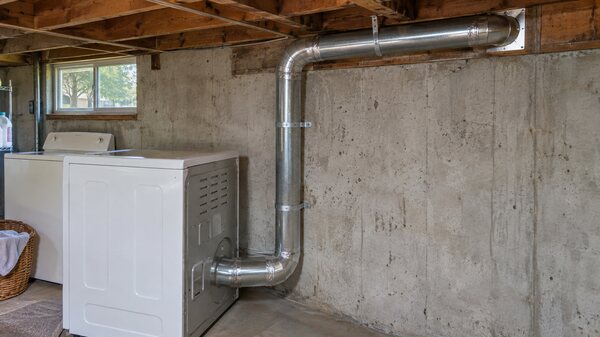
Look at the vent run behind the dryer and the cap outside. The U.S. Fire Administration says "building codes require that clothes dryers be exhausted directly to the outdoors" and that venting into "attics, soffits, ridge vents, or crawl spaces is expressly prohibited." It also says to "Replace coiled-wire foil or plastic venting with rigid, non-ribbed metal duct."
Minnesota replaces the IRC's mechanical chapters with the Minnesota Mechanical Code (Minn. R. 1309.0010). Its section 504 says exhaust ducts have "a smooth interior finish," that "The maximum length of the exhaust duct shall be 35 feet" (less with fittings), and that "Screens shall not be installed at the duct termination." Your local building official has the final say. Our guide to how long a dryer vent can be goes deeper.
The Rochester Fire Department has advised people to "clean out your dryer vents at a minimum of once per year" (KROC AM News, 2018), and a new owner can't know when the last cleaning was. We can replace a dryer vent when one is needed. See our dryer vent cleaning service.
What Should I Know About the Ducts in an Older Home?
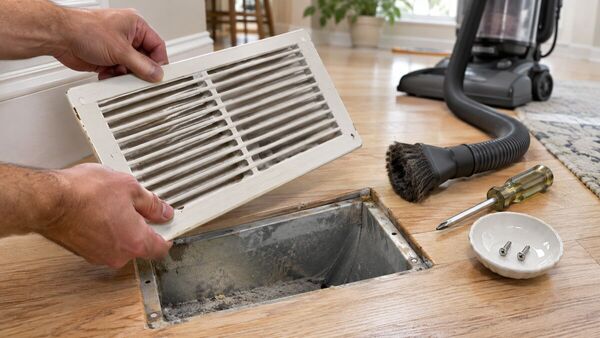
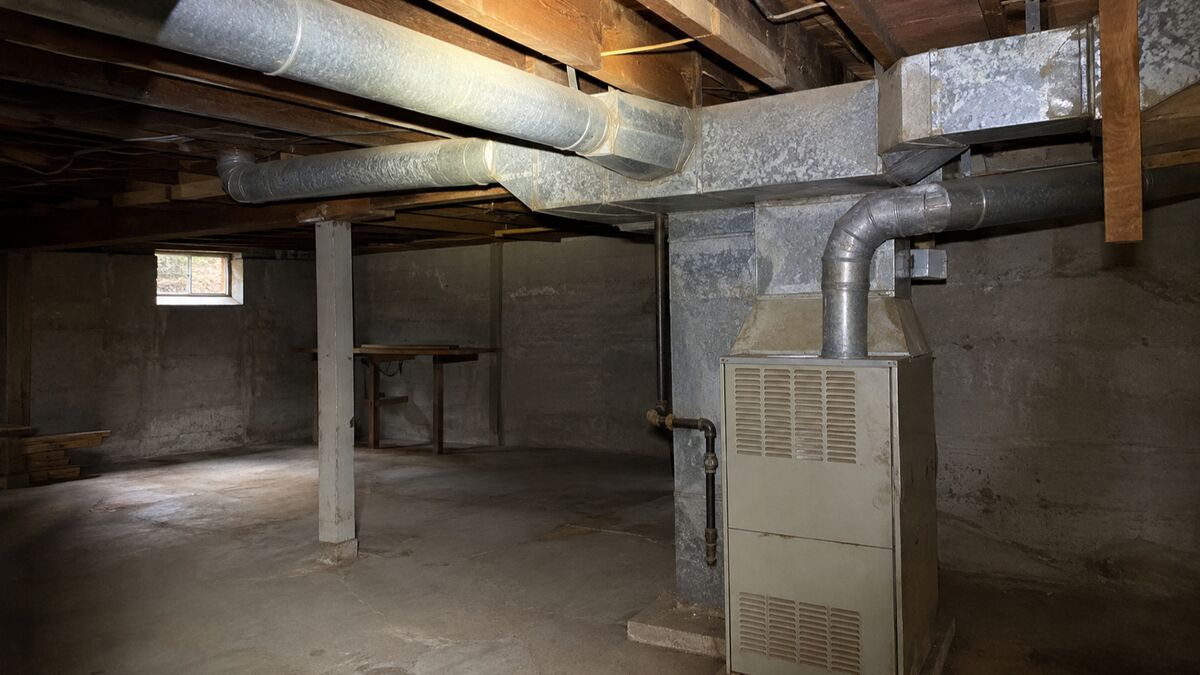
Most ducts in a home are out of sight, so a buyer sees only the registers and returns. The EPA says "A thorough visual inspection is the best way to verify the cleanliness of your heating and cooling system," and that "Many sections of your heating and cooling system may not be accessible for a visible inspection."
The EPA says "a light amount of household dust in your air ducts is normal." It says you should consider cleaning if "There is substantial visible mold growth inside hard surface (e.g., sheet metal) ducts," if "Ducts are infested with vermin, e.g. (rodents or insects)," or if "Ducts are clogged with excessive amounts of dust and debris." It also says "Duct cleaning has never been shown to actually prevent health problems." If you see signs of mice, read what to do about mice in air ducts.
Look at the vent run behind the dryer and the cap outside.
What About Moisture, Asbestos and Radon?
Moisture first: the EPA says "Controlling moisture is the most effective way to prevent biological growth in air ducts," and calls condensation or high humidity "an important indicator of the potential for mold growth."
Asbestos: the Minnesota Department of Health (MDH) says "There are over 3,000 known products that may contain asbestos," and its list includes "Duct work insulation" and "Furnace insulation." That does not mean a given home has it. The EPA says "If you suspect material contains asbestos, don't touch it," and that "A trained and accredited asbestos professional should take samples for analysis." MDH says a "Minnesota certified asbestos inspector" can sample a material and have it analyzed.
Radon: MDH says "every Minnesota home" should be tested and "A radon test is the only way to know how much radon is in your home." Ask the seller for any past result, and see should I test for radon in Rochester.
Want to see what's in your ducts?
Request a free estimate — no obligation.
What Can I Check Myself, and Who Do I Call?
- You: look at the dryer vent run and outside cap, check registers and returns, notice musty smells or condensation, and ask for radon results and any duct or furnace service records.
- Home inspector: the overall heating, venting, distribution and cooling check, within the limits above.
- Heating and cooling contractor: furnace and heat exchanger condition, airflow, and duct repair or sealing. Cleaning the blower and evaporator coil needs a certified HVAC installer. We do not service furnaces, clean the blower or coil, or repair, seal or balance ducts.
- Certified asbestos inspector: if you suspect a material contains asbestos. Don't touch it, and have a trained and accredited professional sample it.
- MedCity Duct Cleaning: cleaning the ductwork from the furnace to the vents, and dryer vents. We quote online or over the phone based on your home's details, and a walk-through the day of your appointment confirms the quote before we begin.
Our own rule of thumb is air ducts every 3 to 5 years, sooner for pets, smokers, allergies or recent renovations. That is our recommendation, not an EPA rule.
Frequently Asked Questions
Should I get the air ducts cleaned when I buy an older home?
Not automatically. The EPA says a light amount of household dust in air ducts is normal and that you should consider cleaning if there is substantial visible mold growth inside hard surface ducts, the ducts are infested with vermin, or they are clogged with excessive amounts of dust and debris. As our own rule of thumb, we recommend every 3 to 5 years.
Does a home inspector check the ducts?
Partly. Under the ASHI standard an inspector opens readily openable access panels and inspects installed heating equipment, vent systems and distribution systems. The standard does not require inspectors to determine the condition of systems and components that are not readily accessible, so ask what your report will cover.
What does a home inspection not cover on the furnace?
The ASHI standard does not require inspectors to inspect heat exchangers or determine heat supply adequacy and distribution balance. It also excludes future conditions, including failure of systems and components. A heating and cooling contractor can look at those items.
Do inspectors check the dryer vent?
Under the ASHI standard, yes. Section 11 of the ASHI Standards of Practice (Insulation and Ventilation) lists \"Clothes dryer exhaust systems\" among the things the inspector shall inspect. The same standard says inspectors are not required to determine compliance with codes or the condition of components that are not readily accessible, so ask your inspector whether the vent run, its length and the outside cap are part of the report.
What should I look for on an older dryer vent?
Look for coiled foil or plastic vent, a screen on the outside cap, and a long or twisty run. The U.S. Fire Administration says to replace coiled-wire foil or plastic venting with rigid, non-ribbed metal duct. The Minnesota Mechanical Code says screens shall not be installed at the duct termination.
How long can a dryer vent run be in Minnesota?
The Minnesota Mechanical Code (IMC 2018, section 504.8.4.1) sets a maximum exhaust duct length of 35 feet, reduced where fittings are used. Your local building official has the final say.
Could the duct insulation in an older home contain asbestos?
It may. The Minnesota Department of Health says there are over 3,000 known products that may contain asbestos, and its list includes duct work insulation and furnace insulation. The EPA says if you suspect a material contains asbestos, don't touch it, and that a trained and accredited asbestos professional should take samples. MDH says a Minnesota certified asbestos inspector can sample a material and have it analyzed.
Should I test an older home for radon?
The Minnesota Department of Health recommends that every Minnesota home be tested for radon, and says a radon test is the only way to know how much radon is in a home. Radon can be reduced with a mitigation system.
Who fixes ducts or furnaces I find problems with?
Call a heating and cooling contractor. Cleaning the blower and evaporator coil needs a certified HVAC installer. MedCity Duct Cleaning does not service furnaces, clean the blower or evaporator coil, or repair, seal or balance ducts. We clean the ductwork from the furnace to the vents, and dryer vents.
Does MedCity Duct Cleaning inspect a home before I buy it?
No. We do not evaluate homes for purchase or test for mold. After closing, you can request a quote online or call us to talk about cleaning your ducts or dryer vent.
Just bought, or about to? Learn about air duct cleaning, request a quote online or call us at (507) 289-4039.
Sources
- Should You Have the Air Ducts in Your Home Cleaned?, U.S. Environmental Protection Agency
- Standards of Practice, American Society of Home Inspectors
- Clothes Dryer Fires in Residential Buildings (TFRS v13 i7), U.S. Fire Administration
- Minnesota Mechanical Code (IMC 2018), Chapter 5: Exhaust Systems, UpCodes
- Minnesota Rules 1309.0010, Office of the Revisor of Statutes, State of Minnesota
- Common Asbestos-Containing Products, Minnesota Department of Health
- Protect Your Family from Exposures to Asbestos, U.S. Environmental Protection Agency
- Radon in Minnesota, Minnesota Department of Health
- Rochester Fire Department Issues Clothes Dryer Advisory, KROC AM News
The MedCity Duct Cleaning Team
Locally owned and operated in Rochester, MN. We specialize in residential and commercial air duct and dryer vent cleaning using professional Rotobrush equipment.