
Why Does My Dryer Take Two Cycles to Dry?
Usually it's an airflow problem you can narrow down in a few minutes.
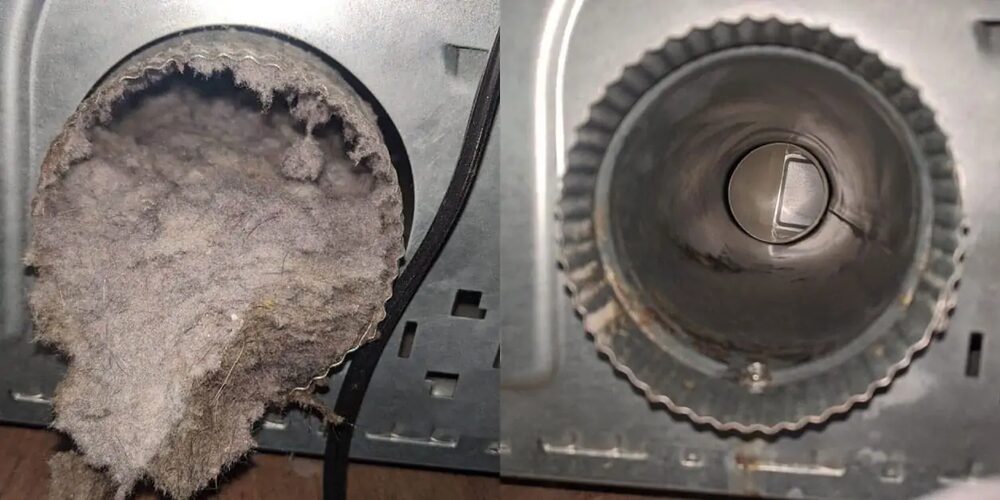
Most often, a dryer that needs two cycles isn't getting enough airflow. A dirty lint screen, a lint-clogged or crushed vent duct, or an outdoor vent flap that won't open can keep hot, moist air from leaving. Overloaded drums, soaking-wet loads from a weak washer spin and problems inside the dryer can also slow drying.
Here's what to expect in this guide:
- The airflow problems that most often cause slow drying.
- Other causes, from load size to washer settings.
- Why a slow dryer is worth fixing.
- What changes in a Rochester winter.
- What you can check yourself, and when to call a vent cleaner or an appliance repair technician.
Think your dryer vent is clogged?
Call us or request a quote for dryer vent cleaning.
What Usually Makes a Dryer Take Two Cycles?
Restricted airflow. Your dryer sends hot, moist air out through the vent, and when that path narrows, the load stays damp.
The U.S. Consumer Product Safety Commission (CPSC) says that if clothing is still damp at the end of a typical drying cycle, or drying takes longer than normal, the lint screen or the exhaust duct may be blocked. The U.S. Fire Administration is more direct: if heavy clothes such as jeans or towels are taking a long time to dry, a clogged dryer vent exhaust is likely the problem.
Common airflow blockers include:
- Lint in the vent. Most lint stays in the filter, but some travels through the vent with the moist air and builds up there, according to the U.S. Fire Administration.
- A crushed or kinked duct. Flexible plastic or foil duct can more easily trap lint and is more likely to kink or be crushed, which can greatly reduce airflow, the CPSC says.
- The wrong vent material. GE Appliances recommends solid metal vent pipe 4 inches in diameter and says flexible metal venting will increase drying time.
- A stuck outdoor flap. GE says to make sure the outside wall cap or damper operates easily.
Slow drying is one of several signs of a clogged vent. Our post on dryer vent warning signs covers the others, like clothes that feel unusually hot at the end of a cycle.
What Else Can Slow Down a Dryer?
Plenty, and some of it costs nothing to fix. These causes come from ENERGY STAR and GE Appliances:
- Too big a load. ENERGY STAR says drying too large a load will cause it to take longer to dry. GE says to dry one wash load at a time and not combine loads.
- A coated lint screen. Dryer sheets can leave a film on the filter that reduces airflow, according to ENERGY STAR.
- Wet clothes from the washer. GE says a low spin speed may not spin the water out adequately. A higher spin speed or extended spin removes more water and decreases drying time.
- A power problem. GE says an electric dryer on a 120-volt circuit instead of a 240-volt circuit can take as much as three times longer to dry, and suggests checking the fuse or circuit breaker that supplies the dryer.
Why Does a Slow Dryer Matter?
Because the same blockage that slows drying may also raise your fire risk. The U.S. Fire Administration calls lint a highly combustible material that can build up in both the dryer and the vent, and says built-up lint reduces airflow and can pose a fire hazard. A vent that can't exhaust properly may let the dryer overheat. The National Fire Protection Association (NFPA) says the leading cause of home clothes dryer fires is failure to clean them.
Efficiency suffers too. ENERGY STAR says cleaning the lint filter after every load improves air circulation and increases the dryer's efficiency, and that a dryer-sheet film can, over time, affect the performance of the motor.
Does Winter in Rochester Make It Worse?
It can add one more blockage: snow. The NFPA says to check the outdoor vent flap to make sure it isn't covered by snow. After a storm in Rochester or anywhere in southeast Minnesota, look at the dryer vent when you clear the walk. Our post on snow-blocked furnace and dryer vents explains what to look for.
What Can I Check Myself?
Start with these, in order. GE says to unplug the dryer before any maintenance or cleaning.
- Clean the lint filter. Do it after every load. If you use dryer sheets, ENERGY STAR suggests scrubbing the filter with a toothbrush once a month.
- Look behind the dryer. The U.S. Fire Administration says to clean the back of the dryer, where lint can build up, and to check that the venting is not damaged, crushed or restricted.
- Go outside while it runs. The CPSC says to check that exhaust air is escaping from the outside vent. If it isn't, the vent or duct may be blocked. The U.S. Fire Administration adds that the outdoor vent covering should open when the dryer is operating.
- Check the load. Dry one wash load at a time. GE also advises against mixing heavy, hard-to-dry items with lightweight ones.
- Squeeze a towel from the washer. If you can wring water out of clothes after the right spin setting, GE says the washer may need service.
When Should I Call a Pro, and Which One?
Call a dryer vent cleaner if the lint filter is clean, the load is normal and little air comes out of the outside vent. The NFPA says to clean lint out of the vent pipe once a year, or more often if clothes take longer than normal to dry, or to have a dryer lint removal service do it. That's the work our dryer vent cleaning service does, from the dryer connection to the outside opening.
Call an appliance repair technician if strong air comes out of a clear vent and the dryer is still slow. GE says that if the basic fixes don't solve it, the dryer may need service. That's not our trade, and we'll tell you so. The CPSC also suggests having a qualified service person clean the interior of the dryer periodically, and the NFPA says gas dryers should be inspected by a qualified professional to make sure the gas line and connection are intact and free of leaks.
Frequently Asked Questions
Is it normal for a dryer to need two cycles?
Not for a typical load. The Consumer Product Safety Commission says clothes still damp at the end of a typical cycle, or drying that takes longer than normal, may be a sign that the lint screen or exhaust duct is blocked. Heavy cotton loads do take longer, because cottons hold more water than synthetics.
Can a clogged dryer vent cause a fire?
It may. The U.S. Fire Administration says lint is highly combustible and that built-up lint reduces airflow and can pose a fire hazard. The National Fire Protection Association says the leading cause of home clothes dryer fires is failure to clean them.
Do dryer sheets make my dryer slower?
They can. ENERGY STAR says dryer sheets can leave a film on the lint filter that reduces airflow. It suggests scrubbing the filter with a toothbrush once a month if you use them.
How often should a dryer vent be cleaned?
Once a year, or more often if clothes are taking longer than normal to dry, according to the National Fire Protection Association. You can clean the vent pipe yourself or have a dryer lint removal service do it.
Why are my clothes still soaking wet when they come out of the washer?
Check the spin setting first. GE Appliances says a low spin speed may not remove enough water, and a higher or extended spin shortens drying time. If you can wring water out of clothes after the right setting, the washer may need service.
If you've ruled out the easy fixes and your vent still isn't moving air, we can help. Request a quote online or call us at (507) 289-4039.
Sources
- Overheated Clothes Dryers Can Cause Fires, U.S. Consumer Product Safety Commission
- Clothes Dryer Fires in Residential Buildings (2008-2010), U.S. Fire Administration (FEMA), Topical Fire Report Series
- Clothes Dryer Fire Safety, U.S. Fire Administration (FEMA)
- Clothes Dryer Safety Tips, National Fire Protection Association (NFPA)
- Clothes Dryers, ENERGY STAR (U.S. EPA)
- Dryer - Taking Too Long To Dry Clothes or Not Drying at All, GE Appliances
The MedCity Duct Cleaning Team
Locally owned and operated in Rochester, MN. We specialize in residential and commercial air duct and dryer vent cleaning using professional Rotobrush equipment.