Dryer exhaust is warm and carries water, and some of that water can condense inside the vent, especially where the duct runs through a cold space. Water in the hose, ice on the outside hood or a cold draft are signs to check the duct, the hood and its damper, and to keep the vent clean.
Here's what to expect in this guide:
- Why a dryer vent gets wet inside
- What frost or ice on the outside hood means
- Why cold air can come in through the vent
- When a duct in a cold space should be insulated
- What you can do yourself, and who to call
Why Does a Dryer Vent Get Wet Inside?
Because the exhaust carries the water from your clothes. The Department of Energy's Building America Solution Center says "Clothes dryers vent about a gallon of water for each typical load of laundry."
The U.S. Fire Administration's report on dryer fires says that if a vent is too long or has many bends and turns, "moisture in the warm air passing through it condenses on the vent surfaces, attracting lint." GE's venting checklist adds that plastic flexible vent hoses "may collapse more easily, reducing air flow and possibly collecting water."
What Does Frost or Ice on the Outside Hood Mean?
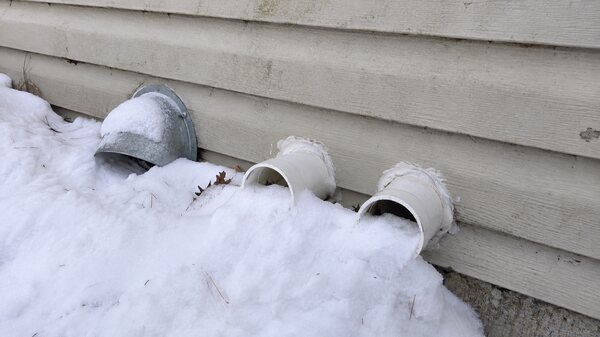
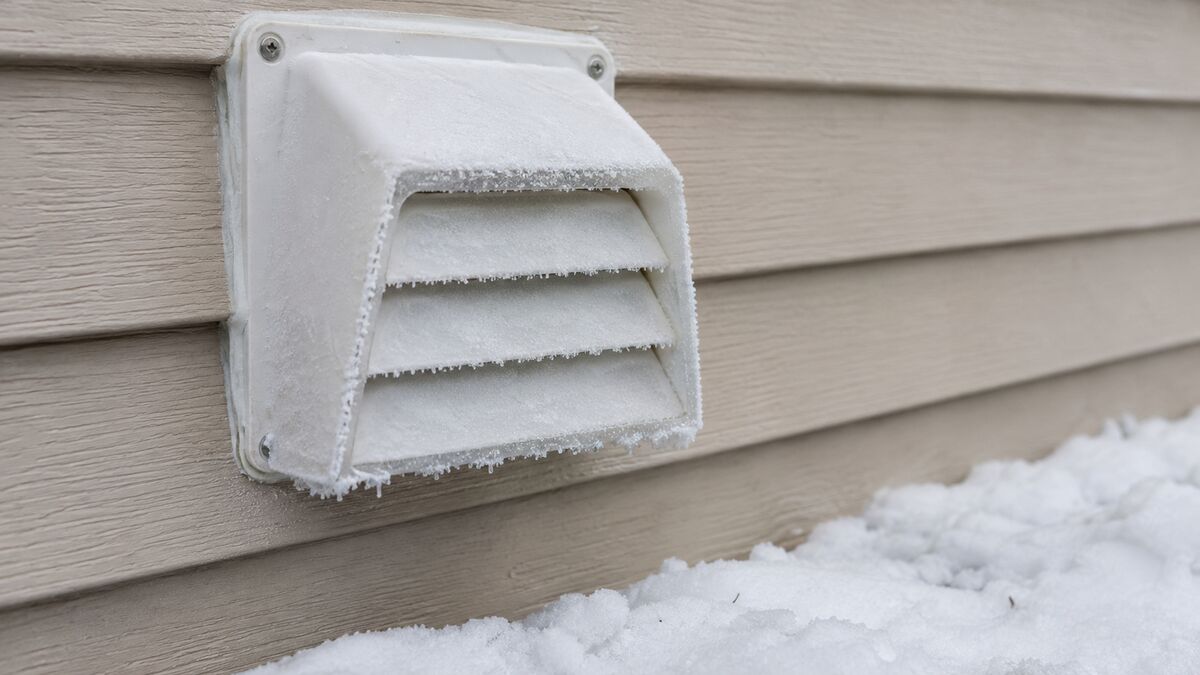
It means the hood needs a look. GE says "Snow or ice should not be allowed to accumulate around the outside wall cap." The U.S. Fire Administration's dryer safety flyer says "Make sure that the outdoor vent covering opens when the dryer is operating." Its report explains why: "A compromised vent will not exhaust properly to the outside. As a result, overheating may occur and a fire may ensue."
Xcel Energy advises you to "Gently remove snow or ice with a brush" from external appliance vents. GE says weak airflow at the wall cap "is typically an indication that the duct is obstructed and should be cleared or improved."
Why Is Cold Air Coming In Through the Dryer Vent?
The damper at the hood may not be closing. Minnesota's mechanical code (Section 504.4) says dryer exhaust ducts "shall be equipped with a backdraft damper." GE's installation instructions say to "Check that exhaust hood damper opens and closes freely."
The hood type matters too. The Building America Solution Center says "A louvered damper is more effective than a single hinged door."
Should a Dryer Duct in a Cold Space Be Insulated?
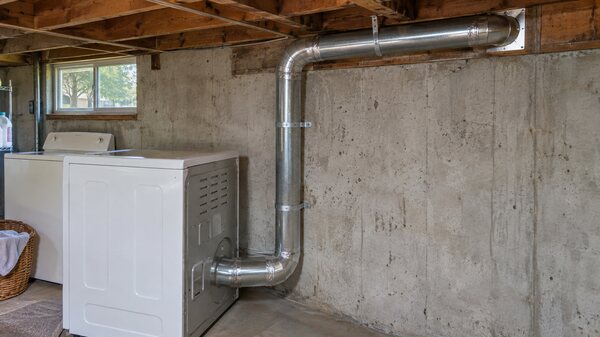
Yes. The Building America Solution Center says to "Insulate ducts in unconditioned spaces, especially in cold climates, to avoid condensation." It also recommends runs with a slight downward angle "to allow any condensation from water vapor in the exhaust air to drain."
Insulating, rerouting or re-sloping a duct, or replacing a hood, is work for a contractor or appliance installer. MedCity Duct Cleaning cleans dryer vents. As part of the cleaning, we check that the vent cap or flap opens and closes properly and let you know if we find an issue.
Is your dryer vent due for a cleaning?
Call us or request a quote for dryer vent cleaning.
Why Does Winter Matter in Rochester?
Dryer fires peak in winter nationally. The USFA report says incidence "was higher in the fall and winter months, peaking in January at 11 percent," and that "Failure to clean (34 percent) was the leading factor."
After a January 2025 dryer vent fire at a Rochester home, Rochester Fire Department Assistant Fire Marshal Jason Fife told KTTC that cleaning the vent once a year "reduces your fire risk." If your dryer vents through the roof, plan ahead: we don't clean rooftop dryer vents while snow covers the roof.
What Can I Do Myself, and When Should I Call Someone?
- Brush snow and ice off the hood and check that the flap opens when the dryer runs.
- Check the hose behind the dryer. GE says the vent "should be rigid metal or flexible metal only."
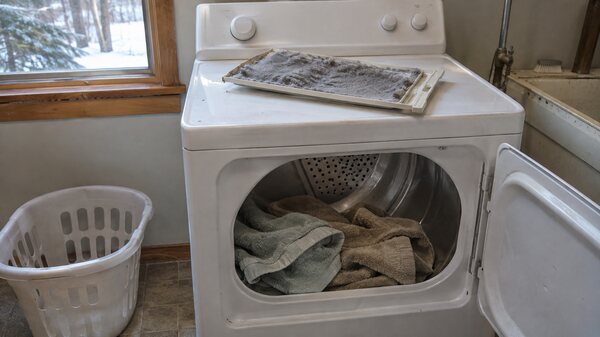
- Clean the lint filter before and after each cycle, as the USFA advises.
- Keep the exhaust outdoors. The USFA says building codes require dryers to be exhausted directly to the outdoors.
Call a contractor or appliance installer for duct or hood changes. If airflow is weak or the vent hasn't been cleaned in a year, that's where our dryer vent cleaning fits.
Frequently Asked Questions
Why is water dripping from my dryer vent hose?
Some of the water in the exhaust can condense in the duct. The Department of Energy's Building America Solution Center says dryers vent about a gallon of water for each typical load. Long runs, many bends, unheated spaces and plastic flexible hoses make this more likely.
Why is cold air coming in through my dryer vent?
The damper at the outside hood may not be closing. Minnesota's mechanical code requires a backdraft damper, and GE says to check that the hood damper opens and closes freely. A contractor or appliance installer can replace a damaged hood.
Can a dryer vent freeze shut?
Check the outside hood in cold weather. GE says snow or ice should not be allowed to accumulate around the outside wall cap, and the U.S. Fire Administration says to make sure the outdoor vent covering opens when the dryer runs.
Should a dryer duct in a cold space be insulated?
Yes. The Building America Solution Center says to insulate ducts in unconditioned spaces, especially in cold climates, to avoid condensation. GE says ductwork in an unheated area should be insulated to reduce condensation and lint buildup. A contractor or appliance installer can do this.
Does condensation make lint build up faster?
It can. The U.S. Fire Administration says condensation in a vent that is too long or has many bends attracts lint, which eventually creates resistance. GE also links condensation in unheated ductwork to lint buildup.
How do I clear ice off my dryer vent hood?
Gently, with a brush. Xcel Energy advises gently removing snow or ice from external appliance vents with a brush. If the vent is on the roof, don't climb up in the snow. MedCity Duct Cleaning doesn't clean rooftop dryer vents while snow covers the roof.
Can I vent my dryer indoors in winter to keep the heat?
No. The U.S. Fire Administration says building codes require dryers to be exhausted directly to the outdoors. The Building America Solution Center adds that devices that bring the heat back inside add unwanted moisture.
What kind of dryer vent hood is best?
A hooded, louvered damper with no screen. The Building America Solution Center says a louvered damper is more effective than a single hinged door, and Minnesota's mechanical code says screens shall not be installed at the duct termination.
How often should I have my dryer vent cleaned?
At least once a year. Rochester Fire Department Assistant Fire Marshal Jason Fife told KTTC that cleaning the vent once a year reduces your fire risk.
Questions about your dryer vent? Learn about dryer vent cleaning, request a quote online or call us at (507) 289-4039.
Sources
- Proper Clothes Dryer Venting, Building America Solution Center (Pacific Northwest National Laboratory for the U.S. Department of Energy)
- Clothes Dryer Fires in Residential Buildings (2008-2010), U.S. Fire Administration
- Clothes Dryer Fire Safety Outreach Materials, U.S. Fire Administration
- Minnesota Mechanical Code 2020, Chapter 5: Exhaust Systems (Section 504), UpCodes
- Installation Instructions, Spacemaker Laundry WSM2700, GE Appliances
- Dryer - Things To Check For A Venting Issue, GE Appliances
- Keep meters and exhaust vents clear of ice and snow, Xcel Energy
- Rochester firefighters respond to fire caused by dryer vent, KTTC

The MedCity Duct Cleaning Team
Locally owned and operated in Rochester, MN. We specialize in residential and commercial air duct and dryer vent cleaning using professional Rotobrush equipment.